Used Isuzu D-Max: common problems and which years to buy
What to check on a used D-Max ute, what a problem looks like, and when to walk away.
Covers
- 1st gen 2008–2012
- 2nd gen 2012–2020
- 3rd gen 2020 on
Last updated
Common problems on a used Isuzu D-Max
The most commonly reported problems on a used Isuzu D-Max are exhaust filter (DPF) trouble on utes used mostly for short trips, and oily soot building up in the engine's air pipes. D-Maxes are popular work and fleet utes, so check for a bent chassis, tired rear springs and undocumented modifications.
For the D-Max you're looking at, the Shufti app has a free inspection guide to take to the viewing, and a Tailored check built for that exact car.
Exhaust filter (DPF) trouble
A diesel D-Max has a filter in the exhaust, the DPF, that traps soot and burns it off as the ute drives. The burn-off needs a hot exhaust, so it happens on longer runs. A ute that has mostly done short trips around town can keep starting a burn-off and never finishing it, and the filter slowly clogs (Unsealed 4X4).
The signs are a DPF or engine warning light, the engine losing power, and the oil level creeping up as diesel from the interrupted burn-offs gets into the oil. At the viewing, check the oil isn't above the top mark and doesn't smell of diesel, and ask how the ute was driven and whether the filter has ever been cleaned or replaced.
A clogged filter can sometimes be cleared by a mechanic, but a replacement is an expensive fix, so price it into your offer. If the filter has been removed instead, walk away or get it put back: driving without it is illegal and can void insurance.
Oily soot in the engine's air pipes
A D-Max feeds some exhaust gas back into the engine to cut emissions. That gas carries soot, which mixes with oil mist from the engine's breather and builds up as a thick, oily sludge in the air pipes and intake. Over time it chokes the engine's airflow, causing lost power, rough running and more smoke (Unsealed 4X4).
Under the bonnet, look for thick, oily black soot around the air pipes and the joins in the intake. On the drive, feel for flat spots or power loss, and watch for black smoke under load.
Ask whether the intake has ever been cleaned out, with receipts. A clean-out is a mechanic's job, so price it in if the build-up is heavy. Some owners fit a catch can to cut the oil mist, which is fine when it's neatly done.
A bent chassis
The chassis is the steel frame the D-Max's body sits on. Too much weight at the back, from heavy canopies, loaded trays, towing at the limit or hard off-road driving, strains it just behind the cab, and over time it can bend there. A GVM upgrade lets a ute legally carry more without making the chassis any stronger.
Stand side-on to the ute. The gap between the back of the cab and the front of the tub or tray should be even from top to bottom; if it's narrower at the top, the chassis may be bent. Then look underneath, behind the cab and near the rear suspension, for kinks, cracks, fresh welds or cracked paint on the frame.
A bent chassis affects how the ute handles and how it holds together in a crash, so treat it as a reason to walk away. A repair should come with an engineer's report.
Tired rear springs
The rear springs carry whatever is in the tub, and years of heavy loads, canopies and towing flatten them. A D-Max with tired springs sits low at the back, bottoms out over bumps, and steers and brakes worse when it's loaded or towing (Unsealed 4X4).
Park the ute empty on level ground and look from the side: the rear shouldn't sit lower than the front. Underneath, the leaf springs should still curve upward, with no cracked leaves or worn mounts.
New springs are a moderate cost, so price them into your offer. If aftermarket springs are fitted, ask for the paperwork, as springs that raise the load limit need to be certified.
Undocumented modifications
Many D-Maxs have been fitted with lift kits, bigger tyres, bullbars, canopies, GVM upgrades or engine tunes. Done properly and certified, most are fine. Undocumented changes can make a ute unroadworthy or uninsurable, and a tune can mean the exhaust filter has been removed, which is illegal.
Ask the seller for a list of every modification and the paperwork for each, and check that the insurer has been told about them. Ask directly whether the ute has been tuned or had emissions parts removed, and get the answer in writing.
Which Isuzu D-Max years to avoid?
No single Isuzu D-Max year stands out as one to avoid. Newer ones usually have fewer kilometres and less wear, and the newest may still have some new-car warranty left. Whatever the year, a car's condition, service history and recalls tell you more than its build date, and Shufti looks up the reported faults and recalls for the exact car from its listing.
- 1st gen (2008–2012). 14 to 18 years old, typically about 180,000–230,000 km. ANCAP ratings: 3 out of 5 (2008) for the 4x4 dual cab; 3 out of 5 (2008) for the 4x2 single cab chassis. Stability control wasn't available. At this age, condition and history count for more than the year: look hard for rust, worn suspension and leaks, and check whether a timing belt (if it has one) has been replaced.
- 2nd gen (2012–2020). 6 to 14 years old, typically about 80,000–180,000 km. ANCAP ratings: 5 out of 5 (2013) for 4x4 crew cabs built from November 2013; 5 out of 5 (2013) for 4x2 high-ride crew cabs built from November 2014; 4 out of 5 (2012) for the rest. Stability control is standard; AEB wasn't available. Most have done enough kilometres for wear items to come due: check the service history for regular servicing, and whether tyres, brakes and the battery need replacing. Isuzu's new-car warranty is 6 years or 150,000 km for cars sold from January 2019, so ones first sold from 2020 may still be covered.
- 3rd gen (2020 on). Up to 6 years old, typically up to about 80,000 km. ANCAP ratings: 5 out of 5 (2020) for cars built to June 2022; 5 out of 5 (2022), expiring December 2028, for cars built from July 2022, except the Blade. Stability control and AEB are standard. The current model. Isuzu's new-car warranty is 6 years or 150,000 km for cars sold from January 2019, so any may still be covered. On older ones, check the service history and whether tyres, brakes and the battery are due.
Kilometres are at the Australian average of about 12,600 km a year. Well above that means harder use; well below, ask why.
Warranty terms are from Isuzu's warranty page, as at November 2026, for private buyers. The warranty runs from when the car was first sold or registered, which the service book shows.
For the D-Max you're looking at, the Shufti app has a free inspection guide to take to the viewing, and a Tailored check built for that exact car.
Take this D-Max guide to the car. It's free in the Shufti app, with photos, audio and notes as you go.


Isuzu D-Max General inspection guide
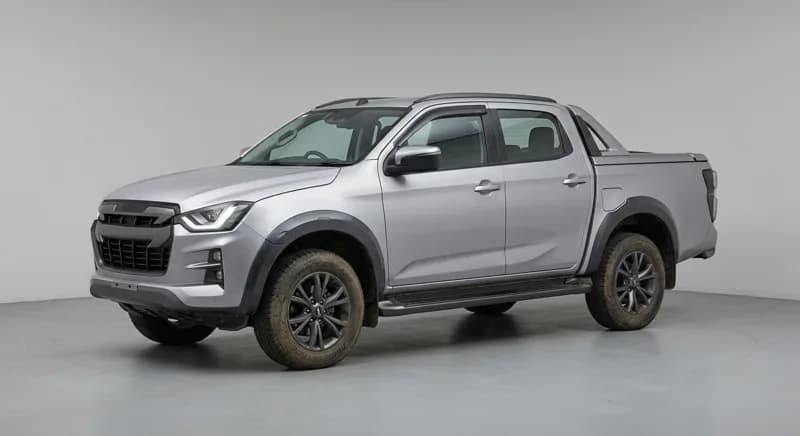
A guide to checking for Isuzu D-Max problems, built on the used car buying checklist for any car. It can't cover every problem reported across its years in one viewing.
- 1st gen 2008–2012
- 2nd gen 2012–2020
- 3rd gen 2020 on
Tick it if it's fine. Cross it if it isn't, and note what you found so you can price it into your offer.
- Safety critical
- Affects how safely it drives or protects you in a crash. Best to have a mechanic check it before you buy.
- Negotiate
- Costs money to fix, from wear to major repairs. Use it as negotiation leverage.
01
Exterior and tub
3 checks, 2 safety critical
01
Exterior and tub
3 checks, 2 safety critical
02
Under the bonnet
5 checks
02
Under the bonnet
5 checks
03
Underbody and 4x4
7 checks, 2 safety critical
03
Underbody and 4x4
7 checks, 2 safety critical
04
Interior and electrics
2 checks, 1 safety critical
04
Interior and electrics
2 checks, 1 safety critical
05
Test drive
5 checks, 2 safety critical
05
Test drive
5 checks, 2 safety critical
06
Documentation
2 checks
06
Documentation
2 checks
Stay safe
Never go under a car held up only by a jack, and never open the radiator or coolant cap on a hot engine. Keep hands, hair and loose clothing clear of fans and belts when the engine is running, and do checks under the bonnet with it switched off where you can. On the test drive, hold a current licence, confirm the car is registered and insured, obey road rules, and only brake hard when the road behind is clear. Meet in a safe, public-facing place, take someone with you, and don't carry large amounts of cash to a viewing.
Disclaimer. Shufti is not affiliated with or endorsed by Isuzu; Isuzu and D-Max are trademarks of Isuzu Motors Limited. Figures are counts from Shufti's analysis of official records and published reports, not a statement that any particular vehicle is affected. This checklist is general information only and is not professional, mechanical, legal or financial advice. It covers common checks, not every possible fault, and a car can pass every item here and still have problems. It is not a substitute for a pre-purchase inspection by a qualified mechanic, which is worth considering before you buy, especially if anything tagged Safety critical turns up. Repair costs vary widely; get your own quotes. Roadworthy, registration and transfer rules differ by state, so check with your state road authority. Private sales generally don't come with the consumer guarantees that apply when you buy from a dealer. You use this checklist at your own risk and, to the extent permitted by law, Shufti accepts no liability for any loss, damage or injury arising from its use.
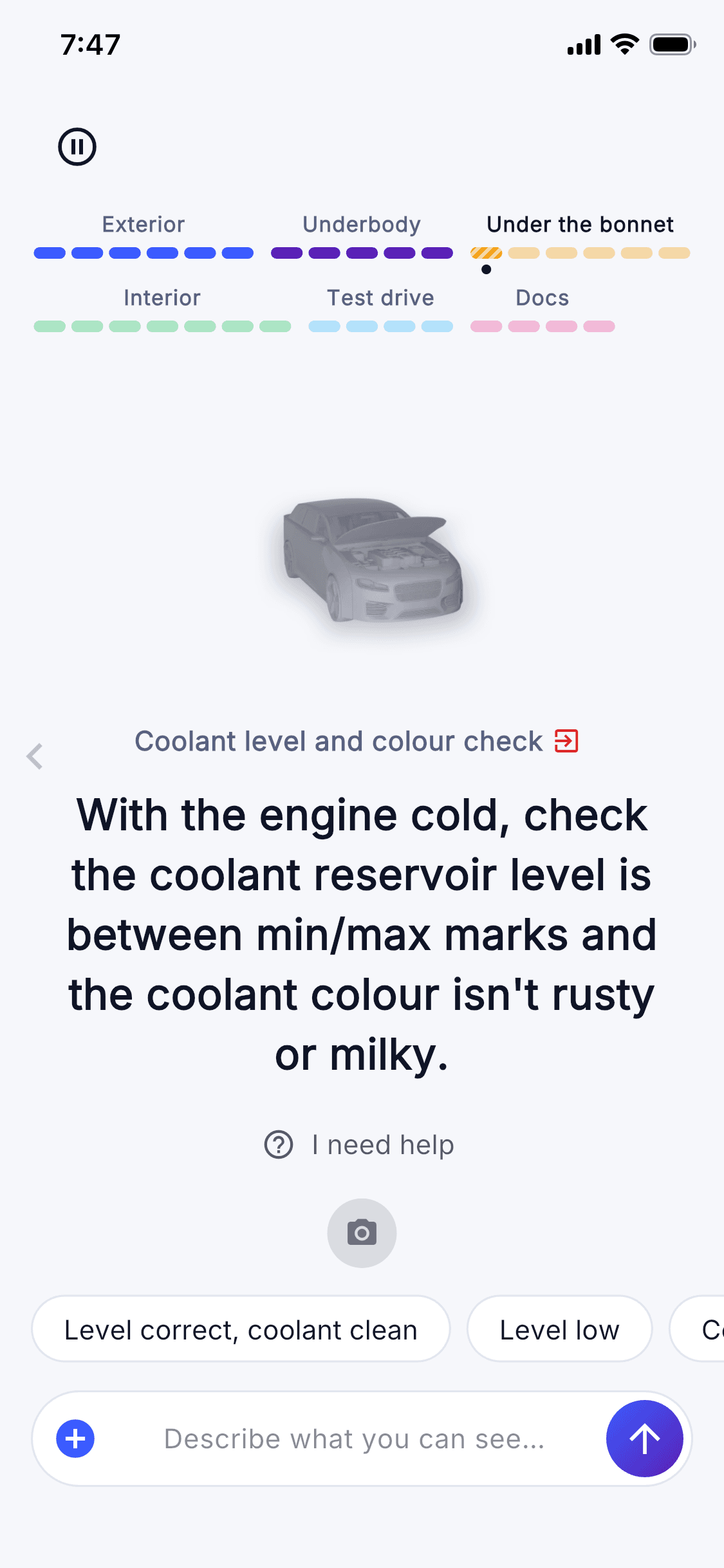
Get this free D-Max inspection guide on your mobile.
Don't drive home in a lemon.
Need more? A Tailored check takes you through that exact car: an inspection and test drive that target its model's known issues, PPSR and recalls, and a negotiation coach that turns what you find into leverage. $24.99.
Rather have it on paper?
Download PDFBuying a used Isuzu D-Max: questions answered
Is a used Isuzu D-Max reliable?
It depends more on the particular car than the badge: how it was driven, loaded and serviced. Work through the commonly reported problems above, read the service history for servicing done on time, and run a PPSR check.
Which Isuzu D-Max years should I avoid?
No single Isuzu D-Max year stands out as one to avoid. Newer ones usually have fewer kilometres and less wear, and the newest may still have some new-car warranty left. Whatever the year, a car's condition, service history and recalls tell you more than its build date, and Shufti looks up the reported faults and recalls for the exact car from its listing.
This checklist covers the 1st gen (2008–2012), 2nd gen (2012–2020) and 3rd gen (2020 on) Isuzu D-Max. Problems reported across them include exhaust filter (DPF) trouble, oily soot building up in the engine's air pipes, a bent chassis and tired rear springs.
How many kilometres is too many for a used Isuzu D-Max?
Kilometres matter less than how a ute has worked. One with high highway kilometres and a full service history can be a better buy than a low-kilometre one that's towed heavy loads, worked on a mine site or been off-road. Check the service history for regular oil changes, ask how it was used, and find out whether any timing belt replacement is due, as it's a costly job.
Should I get a pre-purchase inspection on a used Isuzu D-Max?
It's most worth it on a car where a hidden fault could be costly. Utes that have towed, carried heavy loads or been off-road can hide expensive wear underneath, so look under the car, and check the towbar, suspension and tyre wear closely. Either way, start by checking the car yourself with this checklist, so you know what to look for and whether it's worth paying a mechanic to see. See Pre-purchase car inspection: what it checks and costs
How do I check a used Isuzu D-Max for money owing or a write-off?
Run a PPSR check with the car's VIN on ppsr.gov.au. It shows whether there's finance owing and whether the car has been reported stolen or written off. Run it on the day you pay. See What a PPSR check covers and what it doesn't
How do I check recalls on a used Isuzu D-Max?
Search the government's Vehicle Recalls site for the Isuzu D-Max. Each notice says which models and build dates it covers and what the fault is. A recall on record doesn't tell you whether the work was done on a particular car, so ask the seller for proof, or ask a Isuzu dealer to check the VIN.
Comparing other cars?
Looking at a different car? Use the used car buying checklist for any car or browse problems and checklists by model.