Used Toyota Camry: common problems and which years to buy
What to check on a used Camry, petrol or hybrid, what a problem looks like, and when to walk away.
Covers
- XV40 2006–2011
- XV50 2011–2017
- XV70 2017–2024
- XV80 2024 on
Last updated
Common problems on a used Toyota Camry
The most commonly reported problems on a used Toyota Camry are the very high kilometres and hard-worn interiors of taxi and rideshare use, worn engine mounts that shake the car at idle in Drive, and a cracked or sticky dashboard and peeling paint on older cars. Ask directly whether it was ever registered as a taxi.
For the Camry you're looking at, the Shufti app has a free inspection guide to take to the viewing, and a Tailored check built for that exact car.
Taxi and rideshare wear
Camry hybrids are taxi and rideshare favourites, so many used Camrys have done very high kilometres with a steady stream of passengers. That wears the interior hard, especially the rear seats, door handles and seatbelts, and adds wear everywhere else.
Look for holes in the roof or dash where signs and meters were fitted, and decal residue on the doors. Check that the wear on the steering wheel, pedals, driver's seat and rear seats matches the kilometres. Ask directly whether the car was ever registered as a taxi, and ask for the logbook and any fleet records.
A well-serviced ex-taxi isn't necessarily a bad buy, but it should be priced for its life. On a hybrid, ask for the hybrid battery health check reports, as Toyota's extended battery warranty depends on them.
Worn engine mounts
Engine mounts are rubber blocks that hold the engine in place and soak up its vibration. Over time the rubber hardens and cracks, and on a Camry worn mounts show up as heavy shaking through the car at idle.
With the engine warm, hold the brake, put it in Drive and feel for vibration through the steering wheel, seat and floor. Then shift to Reverse: a heavy shake or a clunk as it engages points to worn mounts.
Mounts aren't a costly repair, but they're worth pricing into your offer. Vibration that's there in neutral as well could be the engine itself, which needs a mechanic.
A cracked or sticky dashboard
On some older Camrys, the top of the dashboard breaks down in the heat. It goes sticky, shiny or cracked, can give off a smell, and can reflect glare onto the windscreen.
Look and feel along the dash top, especially around the vents and the windscreen, for sticky or shiny patches and cracks. Lift any dash mat: it may be hiding damage. Notice any smell when you first open the car.
A new dashboard is a big job, and a dash mat only hides the problem. Price it into your offer.
Peeling paint
Years of Australian sun break down the clear coat on a car's flat surfaces. On many older Camrys, the roof and boot fade, go chalky or start peeling, especially on cars parked outside.
In daylight, look along the roof and boot at a low angle for dull, chalky or peeling patches. Darker colours often show it first.
It's cosmetic, but the only proper fix is a respray of each affected panel, which isn't cheap. Price it into your offer.
Which Toyota Camry years to avoid?
No single Toyota Camry year stands out as one to avoid. Newer ones usually have fewer kilometres and less wear, and the newest may still have some new-car warranty left. Whatever the year, a car's condition, service history and recalls tell you more than its build date, and Shufti looks up the reported faults and recalls for the exact car from its listing.
- XV40 (2006–2011). 15 to 20 years old, typically about 190,000–250,000 km. ANCAP ratings: 4 out of 5 (2007) for the Altise; 4 out of 5 (2007) for the Ateva; 4 out of 5 (2010) for the Hybrid. Stability control is standard from late 2007. At this age, condition and history count for more than the year: look hard for rust, worn suspension and leaks, and check whether a timing belt (if it has one) has been replaced.
- XV50 (2011–2017). 9 to 15 years old, typically about 110,000–190,000 km. ANCAP ratings: 5 out of 5 (2011) for cars built to November 2011; 5 out of 5 (2011) for petrol cars built from December 2011 to March 2015; 5 out of 5 (2011) for hybrids built from 2012 to March 2015; 5 out of 5 (2013) for cars built from April 2015. Stability control is standard. AEB is on higher-priced variants built from April 2015. Most have done enough kilometres for wear items to come due: check the service history for regular servicing, and whether tyres, brakes and the battery need replacing.
- XV70 (2017–2024). 2 to 9 years old, typically about 30,000–110,000 km. ANCAP ratings: 5 out of 5 (2017) for cars built to January 2021; 5 out of 5 (2017) for cars built from February 2021. Stability control and AEB are standard. Most have done enough kilometres for wear items to come due: check the service history for regular servicing, and whether tyres, brakes and the battery need replacing. Toyota's new-car warranty is 5 years with unlimited kilometres for cars sold from January 2019 (up to 7 years on the engine and driveline with logbook servicing), so ones first sold from 2021 may still be covered.
- XV80 (2024 on). Up to 2 years old, typically up to about 30,000 km. ANCAP rating: 5 out of 5 (2024), expiring December 2031. AEB is standard. The current model. Toyota's new-car warranty is 5 years with unlimited kilometres for cars sold from January 2019 (up to 7 years on the engine and driveline with logbook servicing), so any may still be covered. Check how much is left and that servicing has kept it valid.
Kilometres are at the Australian average of about 12,600 km a year. Well above that means harder use; well below, ask why.
Warranty terms are from Toyota's warranty page, as at November 2026, for private buyers. The warranty runs from when the car was first sold or registered, which the service book shows.
For the Camry you're looking at, the Shufti app has a free inspection guide to take to the viewing, and a Tailored check built for that exact car.
Take this Camry guide to the car. It's free in the Shufti app, with photos, audio and notes as you go.


Toyota Camry General inspection guide
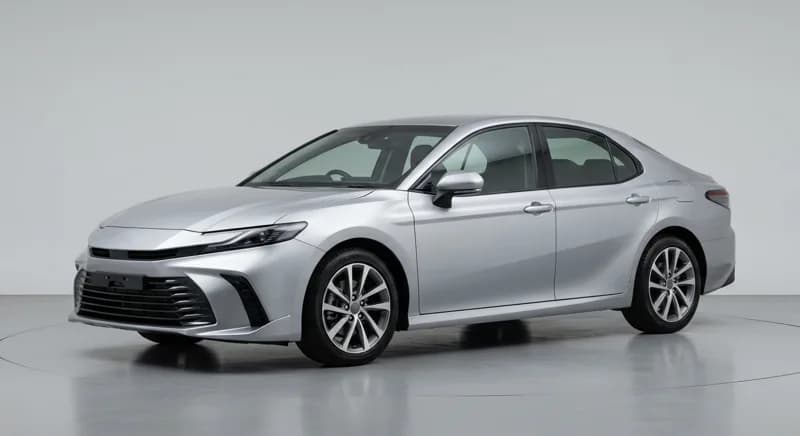
A guide to checking for Toyota Camry problems, built on the used car buying checklist for any car. It can't cover every problem reported across its years in one viewing.
- XV40 2006–2011
- XV50 2011–2017
- XV70 2017–2024
- XV80 2024 on
Tick it if it's fine. Cross it if it isn't, and note what you found so you can price it into your offer.
- Safety critical
- Affects how safely it drives or protects you in a crash. Best to have a mechanic check it before you buy.
- Negotiate
- Costs money to fix, from wear to major repairs. Use it as negotiation leverage.
01
Exterior
3 checks
01
Exterior
3 checks
02
Under the bonnet
5 checks
02
Under the bonnet
5 checks
03
Underbody and wheels
4 checks, 1 safety critical
03
Underbody and wheels
4 checks, 1 safety critical
04
Interior and electrics
4 checks, 2 safety critical
04
Interior and electrics
4 checks, 2 safety critical
05
Test drive
4 checks, 1 safety critical
05
Test drive
4 checks, 1 safety critical
06
Documentation
4 checks
06
Documentation
4 checks
Stay safe
Never go under a car held up only by a jack, and never open the radiator or coolant cap on a hot engine. Keep hands, hair and loose clothing clear of fans and belts when the engine is running, and do checks under the bonnet with it switched off where you can. On the test drive, hold a current licence, confirm the car is registered and insured, obey road rules, and only brake hard when the road behind is clear. Meet in a safe, public-facing place, take someone with you, and don't carry large amounts of cash to a viewing.
Disclaimer. Shufti is not affiliated with or endorsed by Toyota; Toyota and Camry are trademarks of Toyota Motor Corporation. Figures are counts from Shufti's analysis of official records and published reports, not a statement that any particular vehicle is affected. This checklist is general information only and is not professional, mechanical, legal or financial advice. It covers common checks, not every possible fault, and a car can pass every item here and still have problems. It is not a substitute for a pre-purchase inspection by a qualified mechanic, which is worth considering before you buy, especially if anything tagged Safety critical turns up. Repair costs vary widely; get your own quotes. Roadworthy, registration and transfer rules differ by state, so check with your state road authority. Private sales generally don't come with the consumer guarantees that apply when you buy from a dealer. You use this checklist at your own risk and, to the extent permitted by law, Shufti accepts no liability for any loss, damage or injury arising from its use.
Get this free Camry inspection guide on your mobile.
Don't drive home in a lemon.
Need more? A Tailored check takes you through that exact car: an inspection and test drive that target its model's known issues, PPSR and recalls, and a negotiation coach that turns what you find into leverage. $24.99.
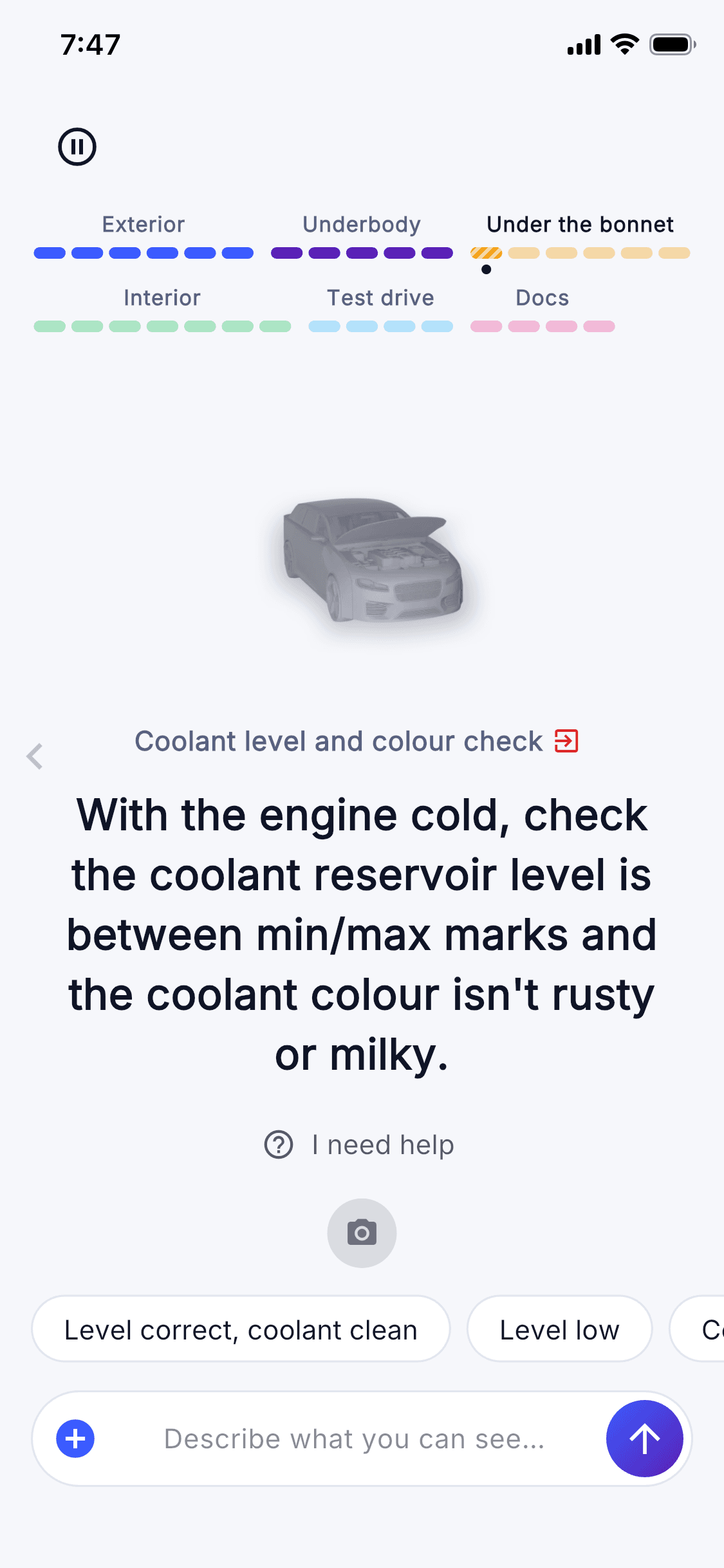
Rather have it on paper?
Download PDFBuying a used Toyota Camry: questions answered
Is a used Toyota Camry reliable?
It depends more on the particular car than the badge: how it was driven, loaded and serviced. Work through the commonly reported problems above, read the service history for servicing done on time, and run a PPSR check.
Which Toyota Camry years should I avoid?
No single Toyota Camry year stands out as one to avoid. Newer ones usually have fewer kilometres and less wear, and the newest may still have some new-car warranty left. Whatever the year, a car's condition, service history and recalls tell you more than its build date, and Shufti looks up the reported faults and recalls for the exact car from its listing.
This checklist covers the XV40 (2006–2011), XV50 (2011–2017), XV70 (2017–2024) and XV80 (2024 on) Toyota Camry. Problems reported across them include the wear of taxi and rideshare use, worn engine mounts, a cracked or sticky dashboard and peeling paint.
How many kilometres is too many for a used Toyota Camry?
Kilometres matter less than how the car was driven and serviced. A high-kilometre sedan with a full service history can be a better buy than a low-kilometre one that's missed services, towed, or been used as a taxi, rideshare or fleet car. Check the history for regular servicing, and on a hybrid ask for a battery health check.
Should I get a pre-purchase inspection on a used Toyota Camry?
It's most worth it on a car where a hidden fault could be costly. Hidden crash repairs, worn suspension and gearbox problems are easy to miss on a short test drive, so check panel gaps and paint closely and drive it long enough to feel every gear change. Either way, start by checking the car yourself with this checklist, so you know what to look for and whether it's worth paying a mechanic to see. See Pre-purchase car inspection: what it checks and costs
How do I check a used Toyota Camry for money owing or a write-off?
Run a PPSR check with the car's VIN on ppsr.gov.au. It shows whether there's finance owing and whether the car has been reported stolen or written off. Run it on the day you pay. See What a PPSR check covers and what it doesn't
How do I check recalls on a used Toyota Camry?
Search the government's Vehicle Recalls site for the Toyota Camry. Each notice says which models and build dates it covers and what the fault is. A recall on record doesn't tell you whether the work was done on a particular car, so ask the seller for proof, or ask a Toyota dealer to check the VIN.
Comparing other cars?
Looking at a different car? Use the used car buying checklist for any car or browse problems and checklists by model.